Yoli’s guilt over Elf’s death
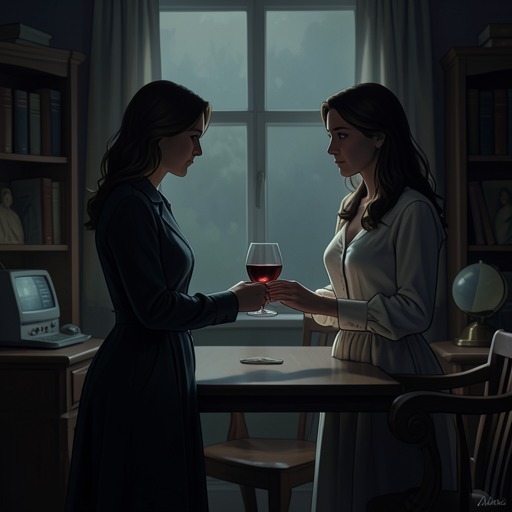
All My Puny SorrowsYolandi’s guilt over Elfrieda’s death is rooted in the collision between two forms of love: protecting her sister by keeping her alive, and wondering whether respect for Elfrieda’s wishes would have meant helping her die. Before Elfrieda’s death, Yolandi investigates assisted death in Switzerland and seriously considers taking her there, but does not go through with it. Afterward, she repeatedly returns to Zurich as the life-ending choice she failed to make, even as those closest to her insist that no one is to blame.
The conflict behind the guilt
Yolandi’s sense of responsibility took shape during earlier crises in which Elfrieda’s wish to die met Yolandi’s determination to intervene. When Elfrieda stopped eating and asked her family not to involve a doctor, Yolandi came from Toronto to Winnipeg and called an ambulance. Their disagreement was no longer an abstract difference of opinion: Elfrieda wanted to die, while Yolandi wanted her to live. They acknowledged that they could feel like enemies because of this conflict and still love each other. The episode established a painful pattern: an act Yolandi understood as care could feel, to Elfrieda, like the denial of her own wishes.
Years later, Elfrieda asked Yolandi to take her to Switzerland. Yolandi initially refused, objecting particularly to the idea of treating the request as one last task. The refusal did not end her involvement. When Nic was preparing to go to Spain, Yolandi searched online for Nembutal and for information about euthanasia for people with mental illness. She learned that Swiss law permitted assistance for someone seeking death, provided the helper had no selfish motive, and that the protection did not depend on Swiss citizenship. This discovery helped her understand why Elfrieda had asked her to go.
Considering Zurich, and stopping short
Yolandi weighed two possible routes: Mexico, where she imagined obtaining Nembutal, and Zurich, where an assisted death might be legal. Neither appeared straightforward. She considered the practical need for Nic and Lottie to agree, and worried that Swiss doctors might decide Elfrieda’s suffering did not qualify. She also feared that describing either plan to Elfrieda could extinguish even a small possibility that she might want to live. The planning therefore did not amount to a settled decision. It exposed Yolandi’s effort to hold open incompatible possibilities: helping her sister end her life, while still hoping for another way through her suffering.
Her uncertainty persisted in conversation with Julie. Yolandi looked up the cost of a clinic in Zurich. Julie questioned whether the option was intended only for people already dying; Yolandi answered that Swiss law also recognized mental illness and weariness of life. This exchange shows her defending the legal possibility without resolving the personal question. Earlier, she had told Elfrieda that she would not take her to Switzerland. Later, she could explain how the option might work, but she still did not take her sister there.
The counterfactual after Elfrieda’s death
After Elfrieda died, the difference between what Yolandi had considered and what she had done hardened into regret. She wondered whether Zurich might have allowed Elfrieda to die peacefully and with someone beside her. In that imagined alternative, Yolandi’s failure was not simply that she had not found a legal route; it was that she had not given Elfrieda the ending she believed her sister wanted. The thought remained a private accusation rather than a conclusion shared with Nic.
The sisters’ disagreement also shaped the conversation about Elfrieda’s burial. Yolandi wanted to keep some of the ashes in Toronto, but Nic opposed dividing them. He also rejected burial in East Village, where Lottie had proposed that Elfrieda be placed with her father, because Elfrieda had expressly said she did not want to be buried there. Her ashes were buried beneath a large tree in Elmwood Cemetery in Winnipeg. The final arrangements could honor Elfrieda’s stated wishes, but they could not undo Yolandi’s feeling that she had failed her while she was alive.
Nic told Yolandi that no one was to blame. Yolandi was not sure she could accept that. Nic, in turn, regretted not fighting harder to keep Elfrieda in the ward. Yolandi told him that he could not have fought harder. Their exchange distributes the burden of responsibility across the people who had tried to care for Elfrieda, without making the guilt disappear. Yolandi’s insistence that Nic had done everything possible coexists with her own harsher judgment of what she might have done.
Grief, confession, and forgiveness
In a letter to Elfrieda dated May 3, 2011, Yolandi admitted that she wished she had taken her sister to Zurich and apologized. She recalled Tina Loewen’s assurance that a feeling of lightness would one day signal forgiveness. The promised sign has not arrived as a confirmed resolution; instead, the letter places Yolandi’s hope for forgiveness beside an unabated confession of regret.
The letter also recounts how Lottie confronted Yolandi about repeatedly calling the Winnipeg hospital to ask for Elfrieda after her death. Lottie had pieced together the calls from the Manitoba numbers on the household phone bills. Yolandi described going out for alcohol, drinking alone, and calling the hospital as though she might still reach her sister there. Lottie held her hand, drew her close, and spoke to her about love, kindness, optimism, strength, and their family. In that moment, the bereaved daughter was also being cared for by her mother; grief had not ended the family’s exchanges of protection and dependence.
Yolandi’s guilt remains unresolved because the story does not supply a simple verdict on her refusal or her later deliberations. Her actions show both sides of the dilemma: she intervened when Elfrieda was in immediate danger, investigated the Swiss option when asked, and ultimately did not take her there. The memory of Zurich persists as a measure of the distance between loving someone, wanting to relieve their suffering, and being able to accept the consequences of either choice.